About

OTOP National Expo 2011

Bacolod Masskara

International Day for Peace 2011

PeaceTech: Youth as Ambassadors for Peace

Painless Breast Cancer Diagnosis

Now in Koronadal!

2011 Guiness World Record Attempt

Flag Raising at Mt Makiling

A Drive to Unwind

Paradizoo: A Farm and Garden Escape

Monday, September 5, 2011

Weekend Blog Follower Caravan #21


I missed WBFC! It's been a while since I last joined. I almost thought it would be replaced with the Pasko sa Agosto craze. It was, by the way, one of the exciting pool of contests this year. Congratulations Mommy Rubz and to all who joined :)

Now, I want to welcome you all in my humble blog. I know..I know. I badly need a new design. Can you suggest a good free template? :)

Many thanks to this week's sponsors: Coffee on the Side and Walking News Paper.

CSR: Impact Over Profit

The need to push and sustain national development has become urgent despite incoming foreign aid. Support will never be enough unless we learn to be self-sufficient and cooperate for long-term benefits. I attended a seminar some years ago acknowledging the strengths of the different sectors in society. It was said that the private sector's strength lies in generating and using wealth efficiently (ROI vs costs). Whilst the NGOs strength lies in the developmental process of building communities.


I have heard about concerns of NGOs building dependencies rather then capacities. It takes time to tell because change does not happen overnight and it takes consistency and effort to manage how we do things and get over attitudes handed down by generations. In my mind, I thought national development was impossible unless we get more support from the big players. Mulit-national corporations, by character, are set-up to maximize resources and generate wealth, taking educated risks along the way. The government does have access to funds though it needs to be accessed by the right people. Talk about corruption in the Philippines is too dirty, I'd rather not compound it. NGOs, I thought, were highly dependent on external funding/grants. What would happen to a beneficiary's development project when the funding suddenly stops? I acknowledge that a growing number of private enterprises have started their non-profit institutions to fill needs.

Well, lets say its too complicated to talk about the government's role here. Immense efforts are being taken. But I'd say many of us have had too much expectations from the government. The checks and balances of the different branches doesn't seem to be working well. Bottom line here is, it would be overwhelming and inspiring to see more get involved and inspire the much needed changes.

Since the 90s, perhaps with PBSP as one of the earliest to intermediate (as explained by Dr Roman) corporations with social enterprises, many corporations have been doing CSR programs in health, education and the poverty for years. These are just a few areas where help is most needed in the Philippines. With social media hastening the spread of news and information, a lot of companies have started to promote their CSR activities. Well, yes, it is similar to soliciting the public's help and good PR at the same time. After all, we need all the help we can get and many fellow Filipinos need our help. I can be sure they have spent so much, hopefully gaining the trust of more consumers and (let's not forget) how this plays a role in their ROI.

I have been yearning to ask, where will these CSR programs lead to?

Last September, at the Conference on Research in CSR, I learned more about trends, opportunities and research in CSR as experts discussed their experiences and studies on CSR. It is good to know that CSR strategists are now looking into long-term community benefits (aside from a project's return value). In considering impact, businesses should look at how businesses are run.
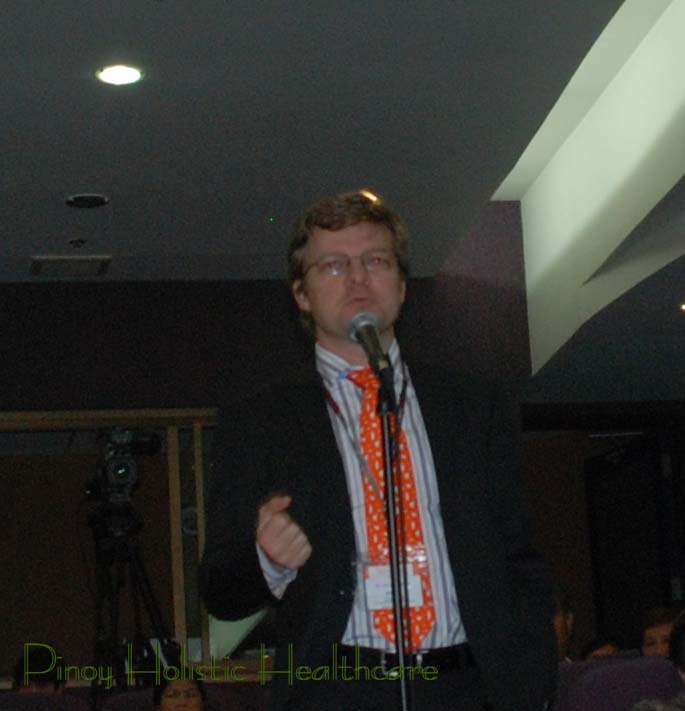
Dr Wayne Visser, CSR International
Successful CSR programs that improve the resource generation of their businesses have been cited. In his study, Dr Ben Teehankee shares that well-driven CSR programs not only increase consumer's trust  and improve brand recall, it also increases the company's chances in getting better employees. A popular example given by speakers is the awarding of scholarships to outstanding students.

CSR programs are also into improving their supply chain. In doing so, more are getting into partnerships with small enterprises and NGOs for sustainable resources management. This is a huge leap considering small and micro-businesses have been struggling to reach profitable markets. A major concern for handicraft producers, for instance, is to tap into the mainstream market. And because these producers are taught to manage their natural resources, MnCs who partner with them help by embracing fair trade practices. With more stakeholders joining to protect the environment, I look forward to a hastened and magnified effort in fighting the impact of climate change. I'm really happy about this!

Ms Lydia Sarmiento, MAP and LCF,
and Prof Fransisco Roman, Jr, AIM RVR CSR
Dr Francisco Roman, however, emphasized, "It is easy to measure output but not outcome." As more stakeholders take part, more considerations must be set to determine the impact on these stakeholders. Mr Wayne Visser cautioned practitioners to look beyond reports as they often miss actual performance. Dr Roman revealed that assessment tools are being developed to measure the different levels of CSR reach and impact. CSR practitioners will have to keep posted until it has been finalized.

In closing, Mr Alex Escano shared the Bayanihan story of an indigenous tribe in Mindanao. MSU Scholarships were granted to a handful of deserving students. The tribe supported the students by building a house where the students will stay without spending on lodging expenses (approved by the MSU administration). They hauled the materials and constructed the house. Every week, the tribesmen alternated bringing food for their students to cut down on living expenses. It was truly inspiring to hear such stories and I hope to share more as I look deeper at social enterprises and what it can do for us.

My family and I support causes related to health, education and the environment. To name a few, we've joined the TEN Movement and the Million Hectare Challenge (Road to 2020). If you are new to CSR, you may want to check CSR International's website. Perhaps you can also help spread the word and invite friends to take as little as 5 minutes a day to support causes that are close to your heart. It can make a difference in a fellow Filipino's life.

Saturday, September 3, 2011

Essentials for First Aid

My son's accident at home made me run to the drugstore to fill a standby First Aid kit. Our household keeps one kit, which is usually taken along when one of us leave for an out-of-town trip. Since college, it has become our habit to include it in our travel checklist.

During my son's recent accident, hubby brought our First Aid Kit when he went out of the country and I was frantic when I realized we didn't keep a spare. While waiting at the hospital, I made a list of what we might need. The list grew so long I had to minimize by considering common accidents at home.
(pix)
So after returning from the hospital, I headed straight to the mall to get these:
(pix)
Our First Aid Kit costs about Php 300 (excluding the black organizer we got as a freebie for being a loyal Laking National customers).

Thursday, August 25, 2011

CSR - Working Towards Shared Values

The First Philippine Conference on Research in CSR is a joint effort to change the way businesses work. From an external function, the trend of CSR now pushes the private sector to support national development whilst pursuing economic profitability and sustainability. 

Despite the increased CSR and not-for-profit efforts, many Filipinos still do not have access to education, healthcare and struggle in poverty. How can CSR efforts be measured and effectively implemented? 

I remember attending a non-profit's capacity-building seminar several years ago. In the lecture, it was discussed how the different sectors in society access, acquire and utilize wealth. The government was said to have the most advantage in accessing funds. Oh, we're talking about good governance and appropriate use of funds, not corruption here. Privately-owned companies often take aggressive and calculated risks in acquiring and utilizing profit. And because the rich are getting richer, they must be doing something right! For a wholesome post, we are again assuming that these businesses are legal, too. Finally, the academe was described as the least to have ease in accessing funds while resources are focused in developing leaders. 

This event will bridge gaps in many ways. For businesses, an introduction to CSR and CSR experiences in the Philippines will be presented. For the academe, research in CSR also opens opportunities for students pursuing business courses. CSR and Corporate Governance are now mandated by CHED for Courses in Business. For NGOs, compare methodologies, best practices and network with possible project partners.

Presentations on CSR Research Experience are lead by CSR experts from DLSU, LCF and AIM. A snippet of Dr Ben Teehankee's research indicate that CSR activities lead to better market acceptability and companies with CSR activities more likely attract better talent. In another perspective, Professor Francisco Roman explained that CSR is an effort towards creating shared value between the shareholder and stakeholder. In his presentation, he will talk about collaborative research, research for businesses as well as lessons and insights on actual CSR experiences.


Dr Ben Teehankee, MAP CSR, DLSU
Prof Fransisco Roman, AIM RVR CSR


Tuesday, August 2, 2011

Pinoy Blogfest 2.0: Social Media as an Agent for Change


Research shows that the Philippines rank among the top users of social media sites With over 20 million active users, can Filipinos use FaceBook, Multiply, Flickr and YouTube as mediums for social change?

"Social Media as an Agent for Change" is Pinoy Blogfest 2.0's theme. Social activities will be held from 10:00 am until 6:00 pm. Among the guest speakers will be Usec. Manuel (Manolo) L. Quezon III, Undersecretary of the Presidential Communications and Strategic Planning Office, and Ms. Gang Badoy, founder of Rock Ed Philippines. 


Pinoy_Blogfest 2.0 is organized by GADGETS Magazine, with the support of The Coca-Cola Export Corporation, Teletech, Canon, Globe, Pony, Neo, Asus, Western Digital, ArchosBenQ, JBL, SennheiserManila Bulletin, Business Mirror, and TriNoma.

Monday, August 1, 2011

First Aid: Treating a Child's Head Injury

My excitement to hubby's return was curtailed by the endless downpour and by several mishaps at home. Good thing my husband's flight was not cancelled nor postponed and so he accompanied me and our little boy for a follow-up with the surgeon this morning.

Nothing serious now, but I was a worry wort for the entire week. You see, my little boy had an accident last week. I know how crazy boys can get, but I was simply caught off guard by this accident.

I have a younger sibling so since 1996, mom has taught us to child-proof our home. Child-proof would mean minimizing accidents at home, from scratches and falls to broken furnishings and appliances. Through the years, I've limited accumulating fragile furnishings and have deliberately put these lovely pieces out of a child's reach. There are only limited areas that have continued to worry me: the steep stairway and the kitchen. To give you a more vivid picture, our home almost looks like a library, except for the boys' toy collections.

We have books that teach the boys about safety:


And I also remind the nannies to always be watchful of my one year old son, who has the energy of a bull and the stamina of an athlete. Despite my necessary precautions, the little boy still met his accident. In his usual ploy, he fell and bumped his forehead on the edge of the bookshelf he was climbing. I heard the heavy thud and he cried very loudly as his nanny tried to pick him up. He was on a chair and was trying to climb the bookshelf. It seems he slipped on the chair and bumped his head before falling on the floor. I found him with his upper body on the floor and his feet still on the chair.

I lifted him and held him tight to comfort his pain. His left eyebrow was bleeding and I was praying that it was not a serious head injury. But even as I tried to calm him, I was too worried because of so much blood and the torn flesh was kind of open. I let one of the nannies to carry him while I dropped Povidone-Iodine on his wound. I asked for ice to put a cold compress on his left eyebrow. He was crying and kept on shoving the cold compress away. I asked one of the nannies to call our neighbor physician. I feel so fortunate living near two new doctors. Good thing she was home and upon seeing my little boy advised me to take him to the ER ASAP. She also told me to give him pain reliever to help my son with the pain. It was around 8:00 pm when we arrived at the Philippine Children's Hospital. The ER was full - all beds were occupied and even as I filled up the info sheet, new patients arrived. By this time, my son wouldn't let anyone near his wound.

Two MDs on duty interviewed me and both informed me that they need to refer to the resident surgeon's advice for treatment. I was told that there was only one surgeon on duty that night and he was still attending to other patients. By 11:30, the surgeon came. Dr. Lumapas informed me that my little boy's open wound had to be stitched. The wound was deep and open and could not be fixed with a tissue adhesive as earlier proposed by one of the ER doctors. Personally, I prefer a tissue adhesive to reduce the patient's pain and risk of infection. The little boy had gone to sleep so I braced myself for more crying when the surgeon starts the procedure.

In a few minutes, Dr. Lumapas and a nurse was ready. I laid my boy to the prepared stretcher and the nurse wrapped him in a sheet (swaddle was more like it). He budged but slept on. I had to keep his body from moving while the nurse held his head. First, the surgeon gave the local anesthesia; Then, the two stitches. My son started crying as soon as he felt the needle and saw unfamiliar faces interchanging under a bright light. Relieved that it's almost over, I carried him and tried to put him to sleep. I think he was very cautious afterwards. He waited until the wee hours before he finally closed his eyes.


The following day, I washed the wound and immediately cleaned it with Povidone afterwards. To counter infection, my one year old was prescribed to take antibiotics and Paracetamol, only to be taken if needed for the pain.
Prescribed medicine
This morning when Dr. Lumapas called on us so he can remove my son's sutures, the little boy immediately took his stand saying, "No, no, no!" He refused to be carried and resorted to thumb-sucking as my husband carried him. No matter what we say to soothe or bribe him, he struggled to keep the doctor away. Poor thing.

With my son's experience, I think it is important for parents to help young children cope and avoid traumatic experiences in the hospital. Because doctors should be our partners in health, I believe that parents should not scare children with negative impressions of going to the hospital or visiting the doctor. We've tried to do this at home but others do not recognize its impact and still get away with it. I usually hear guardians tell stories about  the policeman or the mumu who gets naughty children and the doctor who gives mischievous kids an injection. These stories will not help my son build trust with his doctor.

Share

Twitter Delicious Facebook Digg Stumbleupon Favorites More